Why Can't Hipster Ag Get Along with Everyone Else?
By Jennifer Hill
Regenerative, organic, natural, grass finished, low carbon footprint, Earth friendly and a myriad of other agriculture buzz words are constantly thrown around to our consumers. Small to moderately sized ranchers proudly proclaim their grass finished beef superior for your health and the environment while Joel Salatin goes on Rogan and declares that modern farming techniques are killing the environment and we must all go regenerative to save the future. Shots are fired back and forth across the agricultural isle as everyone looks to catch their share of consumer dollars and “new age” ag hopes to achieve more than fad status. But the truth is that there is room for all types of agriculture in the grocery store and their marketing should not have to tear down other production types in order to be successful.
Marketing gimmicks in agriculture are nothing new. Remember the first time you found out that Certified Angus Beef didn’t have to actually be from an Angus cow? But Angus certainly hit it out of the park with that one. They took a product they already had (high marbling beef) and created a new market for it. Suddenly consumers felt superior purchasing a product with the CAB label. But you know what Angus didn’t do? They never threw punches at Charolais for their product. Angus never even said “we’re better”, they just guaranteed the quality of their product, and it worked.
The reality is all types of agriculture need each other and we are far more interdependent than we’d often like to admit. I need the chick with a small herd of Wagyu cows encouraging Mr. Man Bun that it’s ok to eat beef and that her grass finished product is a good fit for him. Many of the hardcore grass-fed customers have experimented with veganism at one point or another, and if access to grain free beef is what keeps them a meat eater, then so be it. However, when that same producer feels she has to tell her customers that grass finished beef is better for the environment and your health (both definitive lies) she’s not only hurting the broader industry and herself in the long run but also showing insecurities in her own product.
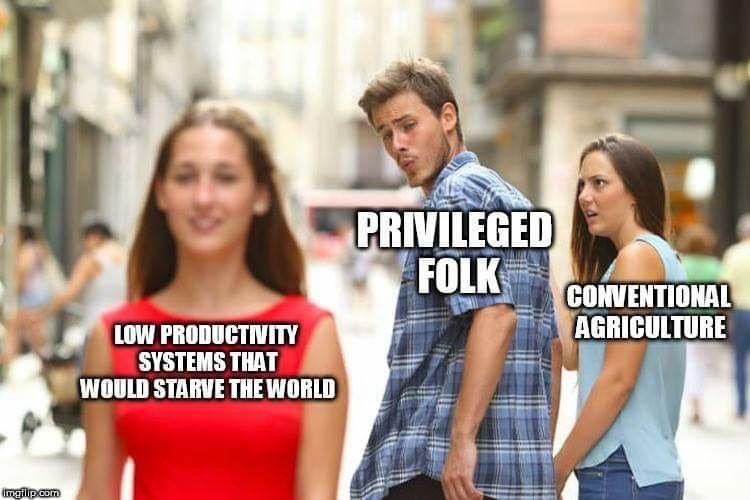
The same can be said for the regenerative ag movement, which declares that there are less than 60 harvests left on the Earth before our topsoil is too depleted to continue producing food. They blame modern farming techniques and the drive for higher productivity. However, what they never want to discuss is how else they plan to feed the world. Regenerative agriculture certainly isn’t going to do it. The mouthpiece of the movement, Joel Salatin, proudly declares that our society currently spends far too little of its income on food, so when regenerative practices cause massive price increases at the grocer, it’ll really be ok. He never gets into the moral implications of this plan. Isn’t allowing the average consumer to spend more of their time and resources outside of food what has led to the technological innovations we all enjoy? Is taking us back to a place where consistently worrying about your next meal and how you’ll pay for it really how we improve the human condition? But the real problem with many of the regenerative ag disciples is that they spend so much of their time bashing the agricultural systems that are feeding the world. There absolutely is a place for their operation in our society. As Millennials and Gen Z become more interested in the where’s and how’s of their food it’s obvious that regenerative farmers and alternative style ranchers have a growing marketplace. But if they really are so proud of what they produce why can’t they let it stand on its own instead of simultaneously tearing down the farmers and ranchers around them?